Introduction
In 2025, Artificial Intelligence (AI) is redefining the global education landscape. Once seen as a futuristic concept, AI in education is now a practical reality. AI tools for schools are enhancing the way students learn, how teachers teach, and how school systems operate. From chatbots that assist students after school to predictive analytics identifying at-risk learners, AI is reshaping every layer of learning.
At the core of this transformation is AI personalised learning, which adapts lesson content and pace to individual student needs. Instead of rigid, one-size-fits-all instruction, students now receive content tailored to their strengths and areas for improvement. For teachers, AI takes care of repetitive tasks like grading and lesson planning, giving them more time to focus on meaningful student interaction.
Schools are using AI teaching assistants, intelligent grading tools, and immersive technologies like VR and AR, making learning more engaging and accessible. However, these innovations come with concerns, including ethical AI use, data privacy, cost, and equitable access.
This blog explores how AI is being used in classrooms in 2025, the technologies involved, the advantages and risks, and the AI future in education.
1. What is AI in Education?
AI in education refers to the use of artificial intelligence technologies—such as machine learning, natural language processing, computer vision, and robotics—to support teaching and learning. These tools are built to simulate aspects of human intelligence, enabling machines to:
- Customise lessons in real-time
- Grade assignments and give instant feedback
- Provide 24/7 tutoring through conversational bots
- Track student performance and learning patterns
- Offer inclusive support for students with disabilities
AI is making education more personalised, scalable, and data-driven — supporting both students and educators.
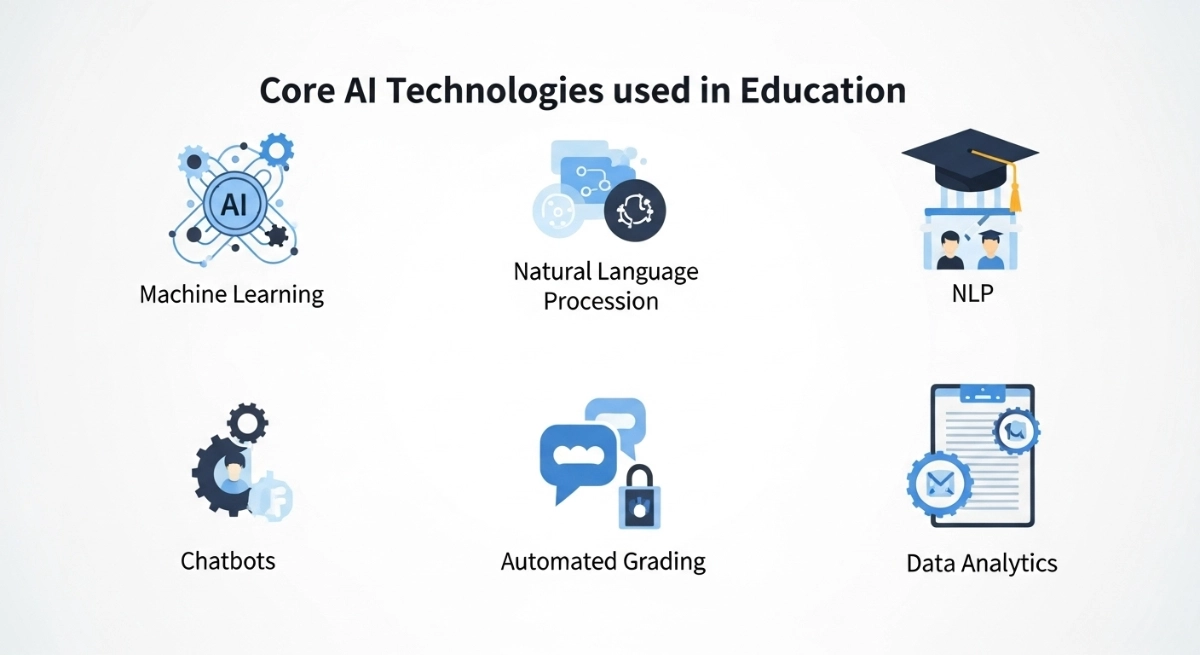
2. How Are Schools Using AI Tools in 2025?
3.1 AI-Powered Personalised Learning
AI platforms now deliver hyper-personalised learning by analysing individual student data. They assess learning styles, past performance, attention spans, and even emotional states to craft unique learning paths. For instance:
- Squirrel AI and Carnegie Learning adapt math problems based on real-time performance.
- Literacy tools adjust reading levels and vocabulary for each learner.
- Learning platforms use reinforcement learning to identify when a student needs review or is ready for the next challenge.
This ensures that students learn at their own pace—struggling learners get extra help while advanced students remain engaged.

3.2 AI Teaching Assistants
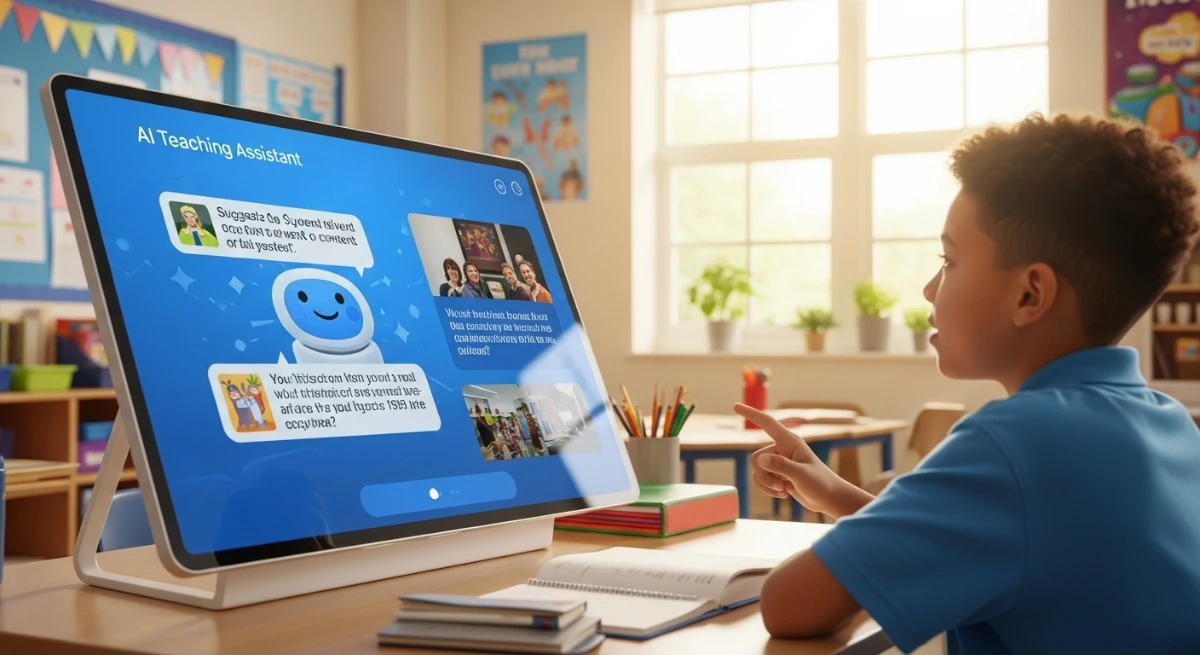
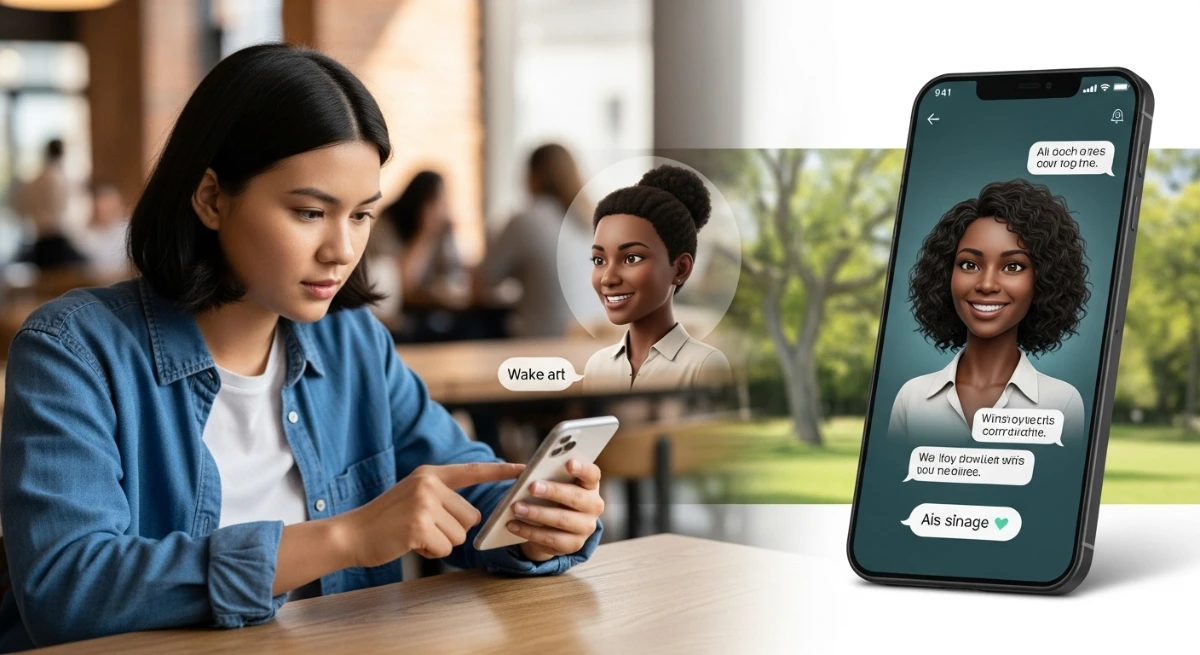
Virtual AI teaching assistants are increasingly common in schools:
- Chatbots answer student questions 24/7.
- AI avatars guide students through lessons visually.
- Tools like IBM Watson Education Assistant provide instant access to curated resources.
These AI assistants can also recommend content based on classroom discussions or help students review concepts before exams.
3.3 AI for Grading and Assessment
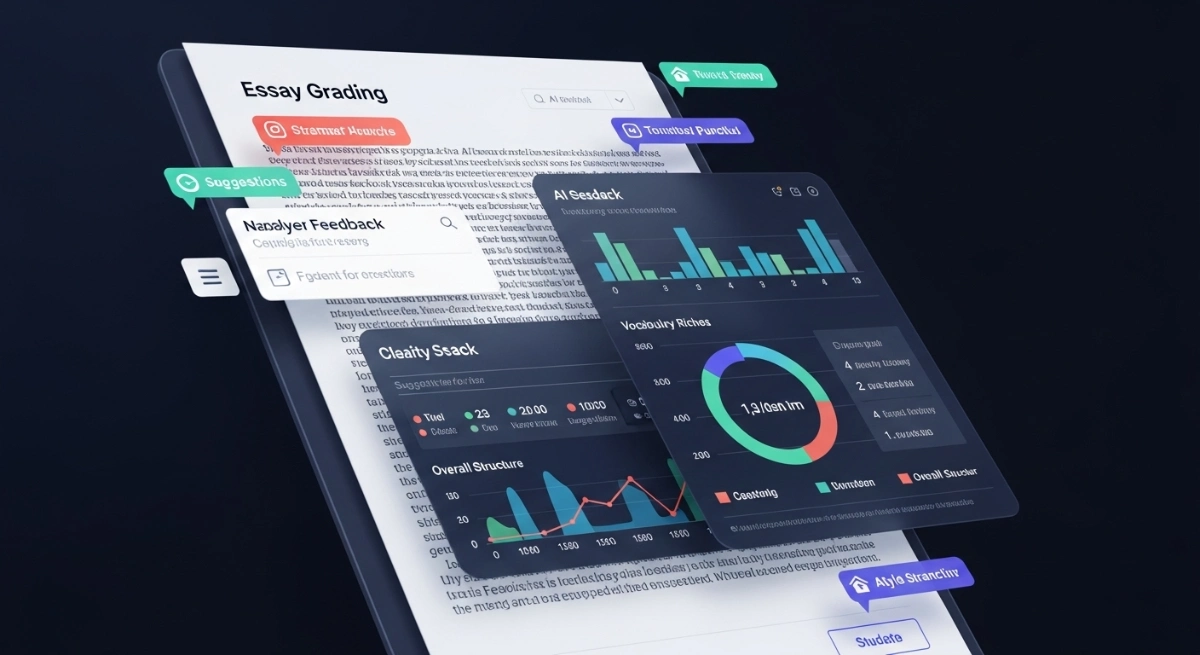
Teachers are now using AI tools for grading both objective and subjective assessments:
- Essay grading tools assess structure, logic, coherence, and grammar.
- Speech-to-text AI supports oral exam analysis.
- Instant feedback systems allow students to improve before final submissions.
- AI flags patterns in classroom-wide assessments, helping educators adjust teaching strategies.
This saves teachers hours every week and supports data-driven decision-making.
3.4 AI in Language Learning
Language education has seen major improvements thanks to AI learning tools:
- Apps like Duolingo Max use GPT-powered conversational AI for real-time speaking practice.
- AI provides pronunciation feedback based on native speaker models.
- Immersive tools simulate real-world environments to improve language fluency.
These tools accelerate learning and make it easier to practice languages anywhere.
3.5 AI and Smart Classrooms
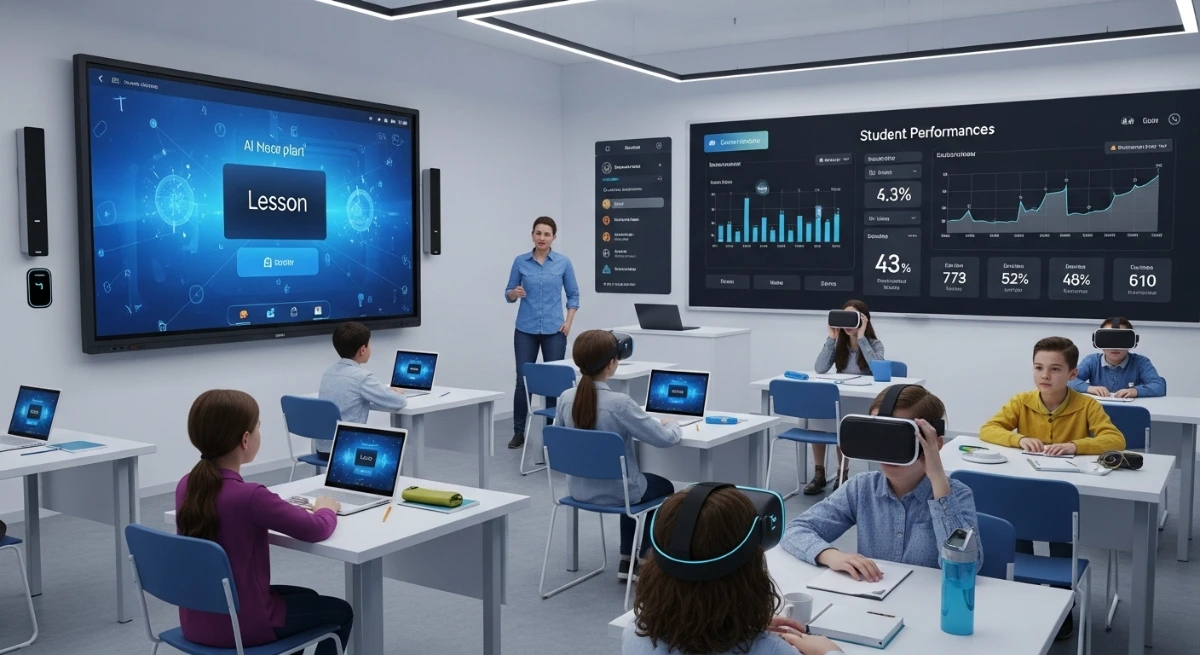
Many schools have adopted AI in classrooms to build smart environments:
- Facial recognition systems handle secure attendance.
- Smart scheduling tools manage classroom resources automatically.
- Predictive analytics identify students who may struggle and recommend interventions.
- AI-powered robots and AR/VR tools support STEM learning in interactive ways.
These smart classrooms are more engaging, efficient, and adaptive than traditional ones.
3. Benefits of AI in Education
Here are the top AI education benefits in 2025:
Personalised Learning
Tailored content improves understanding and keeps students motivated.
Increased Efficiency for Teachers
Tasks like grading, feedback, and content generation are automated, saving time.
24/7 Support
AI chatbots and assistants allow students to learn and ask questions outside school hours.
Data-Driven Insights
Educators use learning analytics to detect patterns and improve outcomes.
Better Accessibility
AI tools assist students with disabilities using text-to-speech, speech-to-text, and screen readers.
Enhanced Engagement in STEM
Robotics, AR, and simulations help make complex scientific concepts more relatable and interactive.

4. Challenges of Using AI in Schools
Despite the benefits, there are still several AI education challenges:
Data Privacy Concerns
Sensitive student data must be protected against misuse and breaches.
Bias in AI Algorithms
AI models trained on biased data can produce unfair results in assessments or recommendations.
High Implementation Costs
Infrastructure, training, and maintenance require significant investment.
Technology Dependence
Too much reliance on AI can reduce human interaction and social learning.
Digital Divide
Unequal access to AI tools across regions or income levels widens educational gaps.
Addressing these challenges requires strong ethical standards, policies, and inclusive planning.
5. Future of AI in Education Beyond 2025
As AI continues to evolve, so does its potential in education. Here’s what lies ahead in the AI future in education:
Emotional AI
AI will interpret student emotions (via facial recognition or voice tone) to adjust lessons in real-time.
AI Mentorship Platforms
Systems will offer academic and career guidance based on student interests, strengths, and goals.
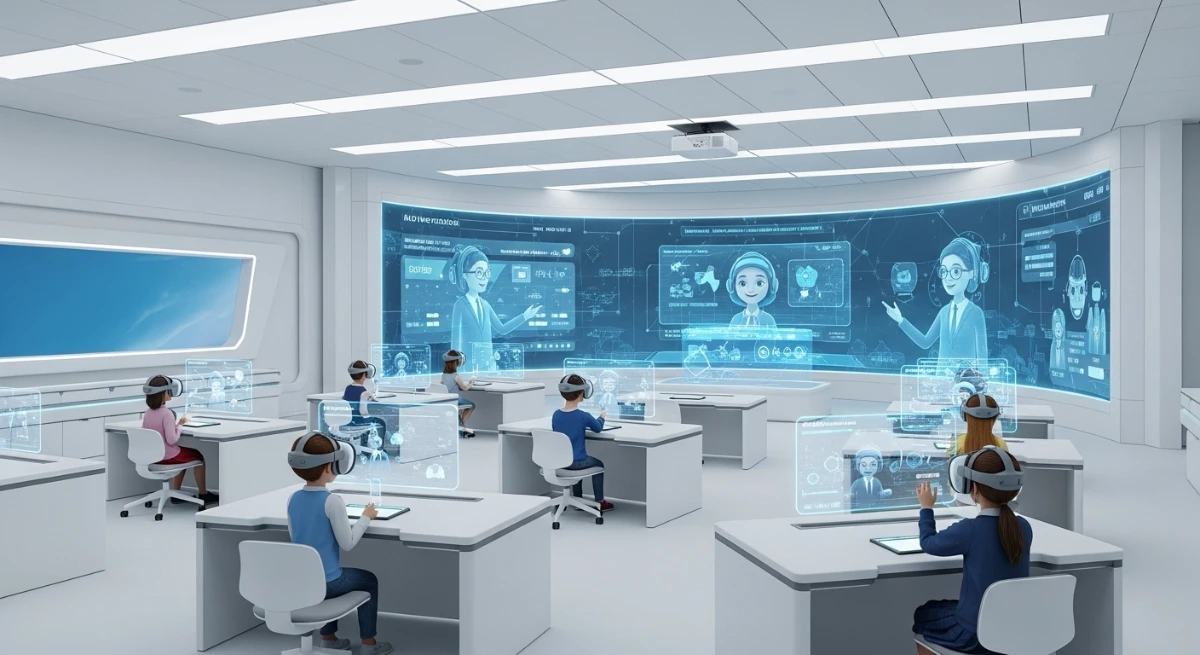
Fully Immersive Classrooms
Virtual reality (VR) and augmented reality (AR) powered by AI will become a standard part of science, history, and language learning.
Ethical AI Frameworks
Stricter regulations and global standards will ensure fair, transparent, and secure AI use in schools.
Teacher Training in AI
Educator programs will include mandatory AI literacy and tool integration, making AI a co-teacher rather than a threat.
Ultimately, the future of AI in education is about balance — empowering teachers, engaging students, and protecting ethics.
FAQs
Q1: How is AI used in schools today?
AI is used for personalised learning platforms, automatic grading, intelligent tutoring, performance tracking, and even school administration tasks.
Q2: Will AI replace teachers?
No. AI will assist teachers, not replace them. It automates routine tasks so teachers can focus more on creativity, critical thinking, and emotional support.
Q3: What are the biggest risks of AI in schools?
The top concerns include privacy violations, bias in algorithms, technology addiction, and unequal access to advanced tools.
Q4: How does AI personalise learning?
By analysing student behavior, preferences, and performance, AI adjusts content difficulty, format, and pacing for each learner.
Q5: What skills will students need in the AI-powered future?
Future students will need digital literacy, critical thinking, ethical reasoning, adaptability, and emotional intelligence to thrive alongside AI.
Conclusion
AI in education is no longer optional — it’s a transformative force driving schools into the future. In 2025, from AI learning tools to smart classrooms, the integration of AI has reshaped how students learn and how teachers teach. While challenges such as data privacy, cost, and fairness remain, the potential of AI to personalise learning, enhance inclusion, and improve outcomes is undeniable.
As we look ahead, the goal isn’t to replace human educators but to empower them. AI and teachers together can build learning environments that are more responsive, inclusive, and engaging — preparing the next generation for a world where intelligence, both human and artificial, go hand-in-hand.
![AI Life Autonomous Personas – 5 Game-Changing Trends [2025]](https://inovrex.com/wp-content/uploads/2025/11/AI-Life-Autonomous-Personas-–-5-Game-Changing-Trends-2025.webp)
![GPT-5 Powers Real-World AI Smarts [2025]](https://inovrex.com/wp-content/uploads/2025/08/WhatsApp-Image-2025-08-22-at-12.59.10_827e8782.jpg)