![8 Powerful Use Cases of AI in Supply Chain [2025]](https://inovrex.com/wp-content/uploads/2025/07/future-image-2.jpg)
Introduction
In 2025, Artificial Intelligence (AI) is reshaping global supply chains. From warehouse automation and demand forecasting to fraud detection and real-time visibility, AI supply chain solutions are enabling companies to operate faster, smarter, and with greater agility.
As pressure mounts from customer expectations and global disruptions, businesses are turning to AI in logistics to optimize routes, manage inventory, and streamline operations. With the help of machine learning, IoT sensors, and cloud platforms, companies are making data-driven decisions at every stage.
Let’s explore 8 powerful use cases of AI in supply chain and how leading businesses are already benefiting.
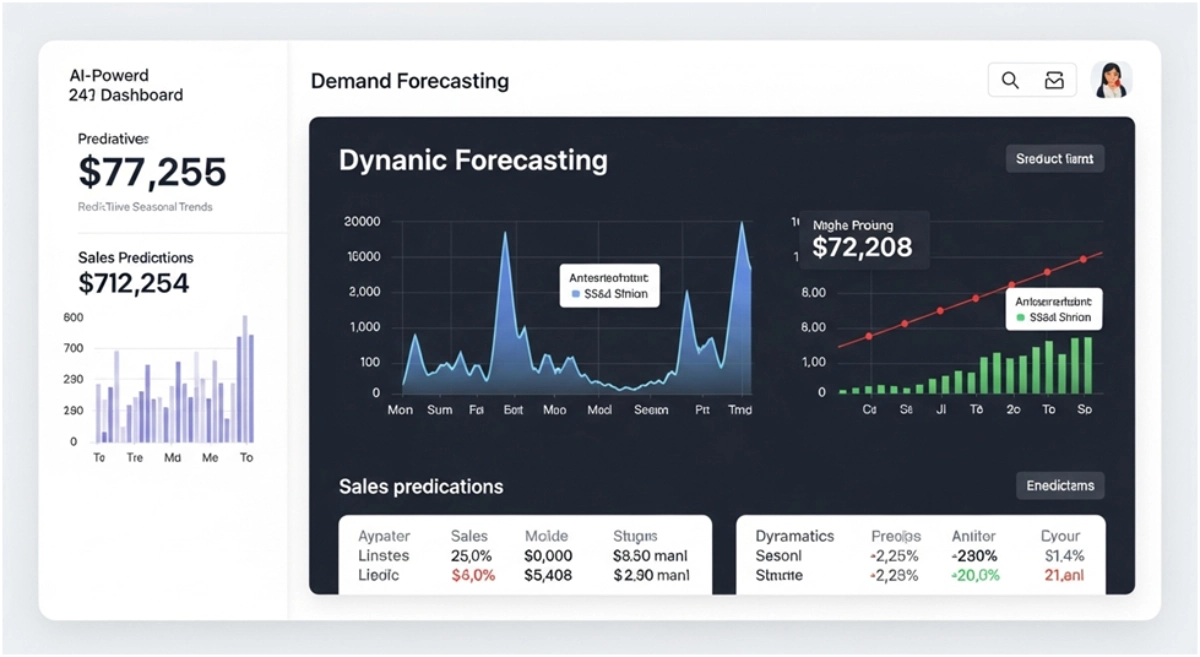
1. AI-Driven Demand Forecasting
AI-driven demand forecasting analyzes large volumes of data — sales history, seasonality, market trends, and even social media — to predict what products will be needed, when, and where.
Benefits:
- Prevent overstocking or stockouts
- Improve planning accuracy
- Align production with real-time demand
Example:
Walmart uses machine learning for supply chain planning by analyzing real-time purchasing trends to fine-tune inventory levels at individual store locations.
2. AI in Inventory Management
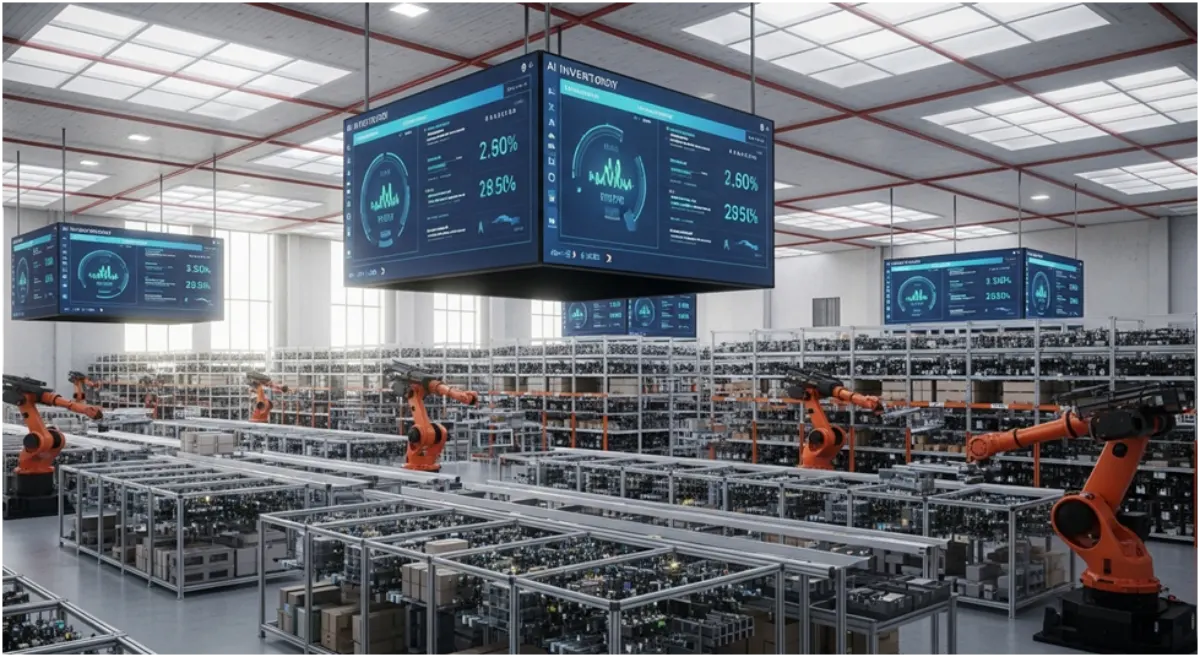
Inventory management becomes smarter with AI. These systems use real-time data and IoT sensors to monitor stock levels, predict reordering points, and optimize warehouse distribution.
Benefits:
- Greater accuracy
- Reduced holding costs
- Lower risk of shortages
Example:
Amazon leverages AI supply chain solutions and robotics to track, store, and move inventory across global fulfillment centers with precision.
3. AI for Warehouse Automation
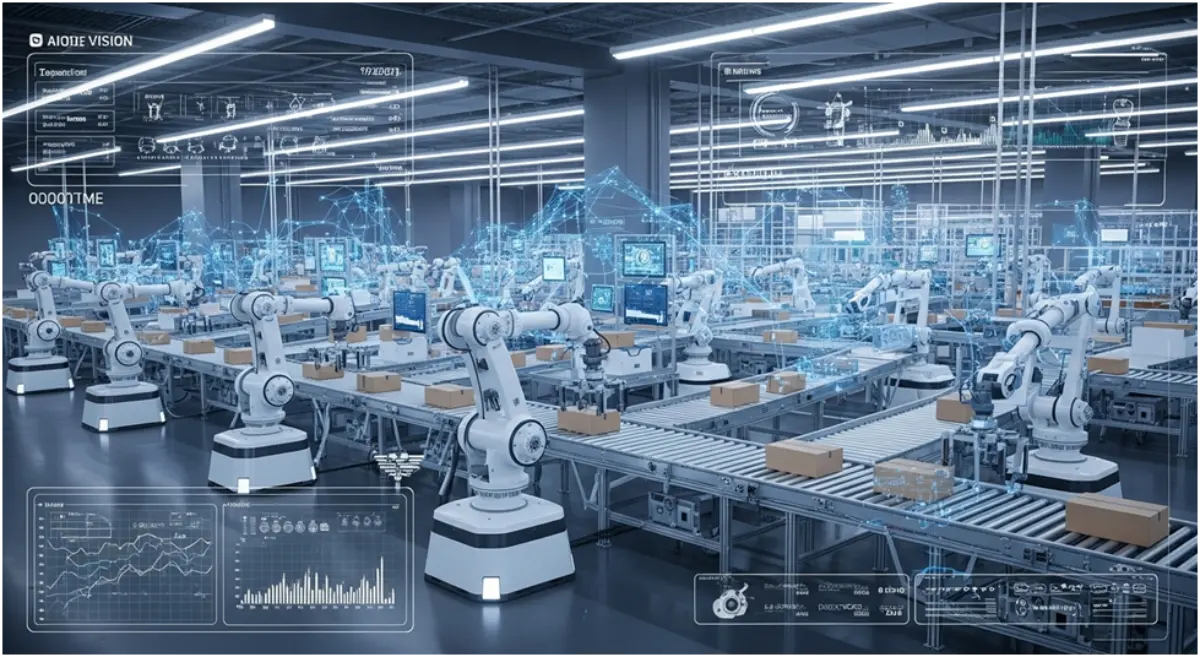
With AI for warehouse automation, robots can now pick, pack, and sort orders using computer vision and intelligent movement systems. This leads to round-the-clock operations and reduced human error.
Benefits:
- Faster order fulfillment
- 24/7 warehouse operations
- Lower labor costs
Example:
Ocado’s smart warehouses use AI-guided robots that process online grocery orders with near-perfect speed and accuracy.
4. Predictive Maintenance in Logistics
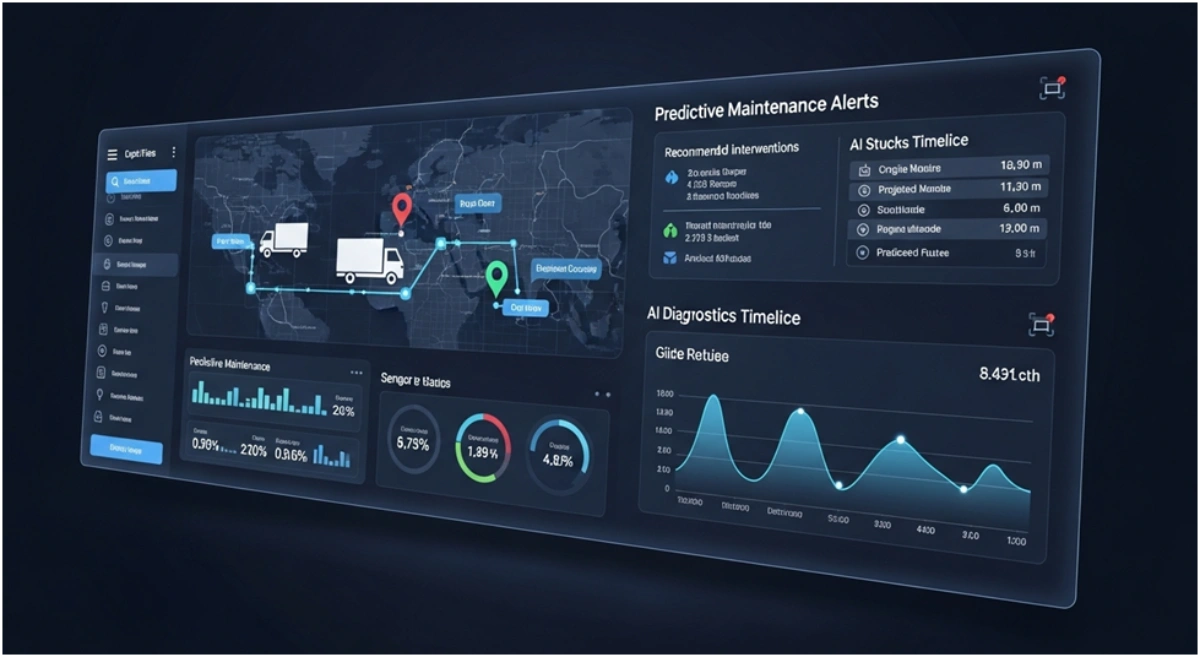
Predictive analytics in logistics uses AI to forecast equipment failures before they occur. Sensors on vehicles and machines track performance data, and AI identifies patterns indicating when maintenance is needed.
Benefits:
- Reduce unplanned downtime
- Extend equipment life
- Cut repair costs
Example:
DHL uses AI in logistics to monitor its delivery fleet, helping predict maintenance needs and reduce unexpected breakdowns.
5. Fraud Detection and Data Security
AI strengthens supply chain security by analyzing large datasets to detect anomalies, fake invoices, or potential cyber threats. These tools provide real-time alerts and risk assessments.
Benefits:
- Detect fraud early
- Enhance cybersecurity
- Ensure trust and compliance
Example:
While specific methods are confidential, companies like Maersk invest in AI and machine learning for transaction monitoring and risk detection as part of their broader cybersecurity strategy.
6. Real-Time Supply Chain Visibility
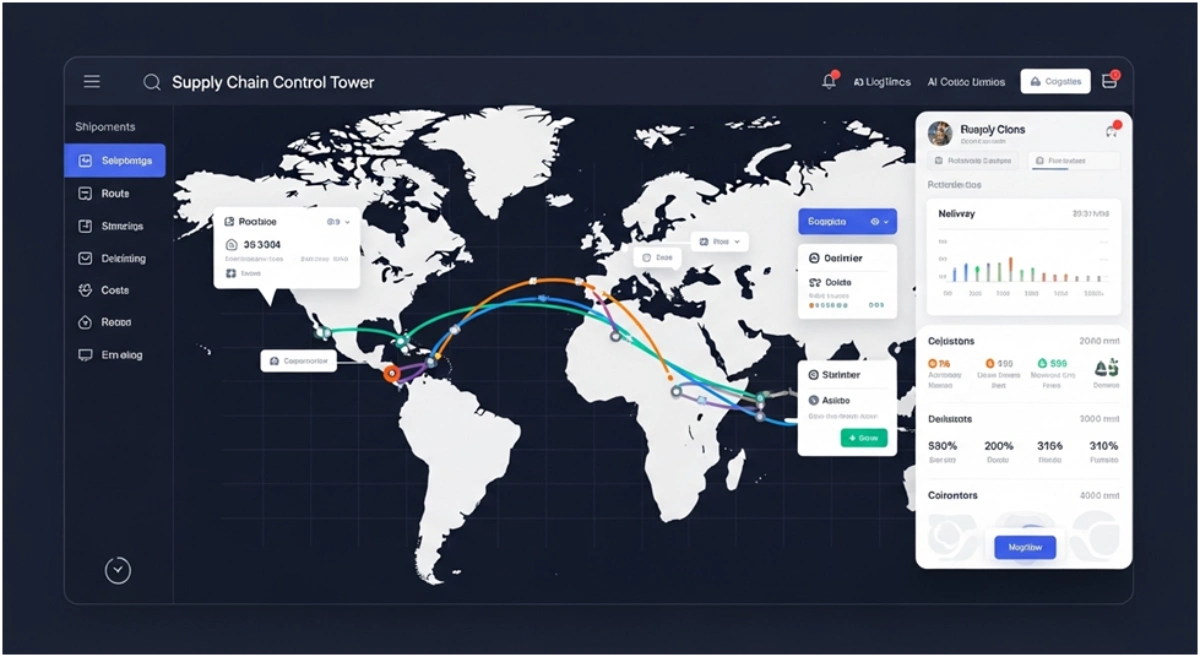
AI for supply chain visibility aggregates data from GPS, telematics, weather systems, and warehouse management tools. Businesses can monitor shipments in real time, detect delays, and reroute deliveries dynamically.
Benefits:
- Full end-to-end tracking
- Faster issue resolution
- Better customer satisfaction
Example:
PepsiCo uses AI-powered dashboards to optimize shipments, improve route planning, and shorten delivery timelines across its global supply chain.
7. AI for Sustainable and Ethical Sourcing
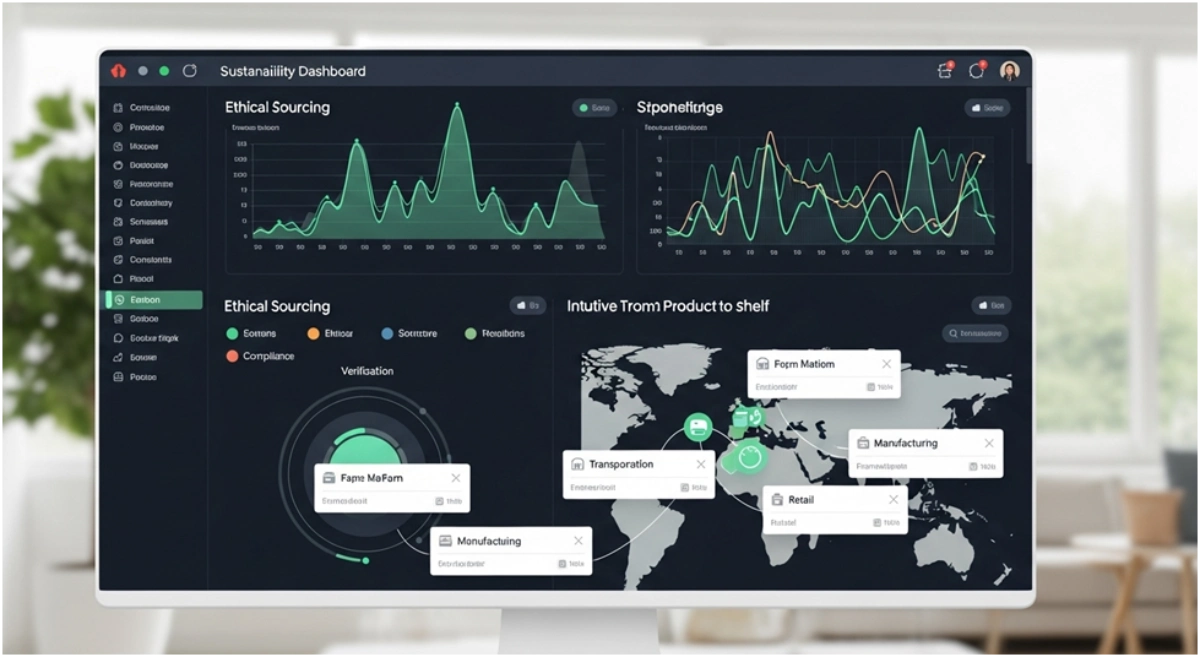
AI helps companies meet environmental, social, and governance (ESG) goals by tracking sourcing practices. AI models can verify ethical labor usage, monitor carbon emissions, and ensure compliance with sustainability standards.
Benefits:
- Align with green policies
- Increase brand trust
- Improve supplier transparency
Example:
IBM Food Trust uses AI and blockchain to trace food origins, ensuring sustainable sourcing practices from farm to shelf.
FAQs
Q1: Is AI expensive to implement?
Initial investment can be high, but the long-term ROI through efficiency and cost savings is substantial.
Q2: Can AI connect with ERP and logistics platforms?
Yes. Modern AI tools integrate seamlessly with systems like SAP, Oracle, and Microsoft Dynamics.
Q3: Will AI replace human supply chain jobs?
Not entirely. It automates repetitive tasks but creates new roles in monitoring, analysis, and strategy.
Q4: How secure are AI supply chain systems?
AI tools include strong encryption, access controls, and anomaly detection for enhanced security.
Q5: How fast can companies see benefits from AI?
Many businesses report measurable results — such as reduced inventory waste and faster delivery — within a few weeks or months.
Conclusion
The use cases of AI in supply chain are rapidly evolving in 2025, creating new opportunities for businesses to transform their operations. Whether it’s predicting demand more accurately, optimizing inventory, automating warehouses, or ensuring ethical sourcing—AI is no longer a futuristic concept; it’s a practical necessity.
Companies across the globe are now leveraging AI supply chain solutions not just to reduce costs, but to increase agility, improve customer satisfaction, and ensure business continuity in a highly unpredictable world. AI systems can process vast amounts of real-time data, detect patterns humans might miss, and make decisions in milliseconds—something that was nearly impossible a few years ago.
From industry giants like Amazon and Walmart to logistics leaders like DHL and emerging innovators like Ocado, the message is clear: those who invest in AI today are gaining a strong competitive edge tomorrow.
AI is also supporting companies in achieving sustainability goals—by tracking emissions, optimizing routes for lower fuel use, and verifying ethical sourcing—all of which contribute to long-term brand trust and compliance.
As AI technology continues to advance, we can expect even more intelligent, autonomous, and adaptive supply chains. Businesses that embrace this transformation early will be better positioned to respond to disruptions, exceed customer expectations, and lead the market in innovation.
The future of supply chain management is not just digital—it’s intelligent, predictive, and AI-powered. Now is the time to act.
![AI Life Autonomous Personas – 5 Game-Changing Trends [2025]](https://inovrex.com/wp-content/uploads/2025/11/AI-Life-Autonomous-Personas-–-5-Game-Changing-Trends-2025.webp)
![GPT-5 Powers Real-World AI Smarts [2025]](https://inovrex.com/wp-content/uploads/2025/08/WhatsApp-Image-2025-08-22-at-12.59.10_827e8782.jpg)